2026-11-28 · 4 min read
PPE Regulation (EU) 2016/425 and CE Marking
PPE selection requires understanding the intended risk and use. Regulation (EU) 2016/425 sets the European Union conformity framework for personal protective equipment. This guide provides general information; current qualified advice is needed for national rules, product category and intended use. It does not invent legal clauses or promise a single compliance guarantee for every country.
CE is not an EN standard or a protection class
CE marking indicates the manufacturer's responsibility for conformity with applicable legislation. It is not a standard such as EN ISO 20471 or a performance class such as 1, 2 or 3. CE alone does not explain covered hazards or protection levels. Review the model's standards, classes, instructions and documents separately. Do not treat CE as a universal quality badge implying identical test results.
Separate standards, declarations and certificates
An EN standard defines technical requirements for a particular subject. A declaration of conformity is the manufacturer's declaration for a specific product. A type-examination certificate is assessed within its own model, standard, size and validity scope. These are not interchangeable. A pictogram or photograph cannot independently verify a certificate. Declarations and documents provide information by model code.
Read the model scope
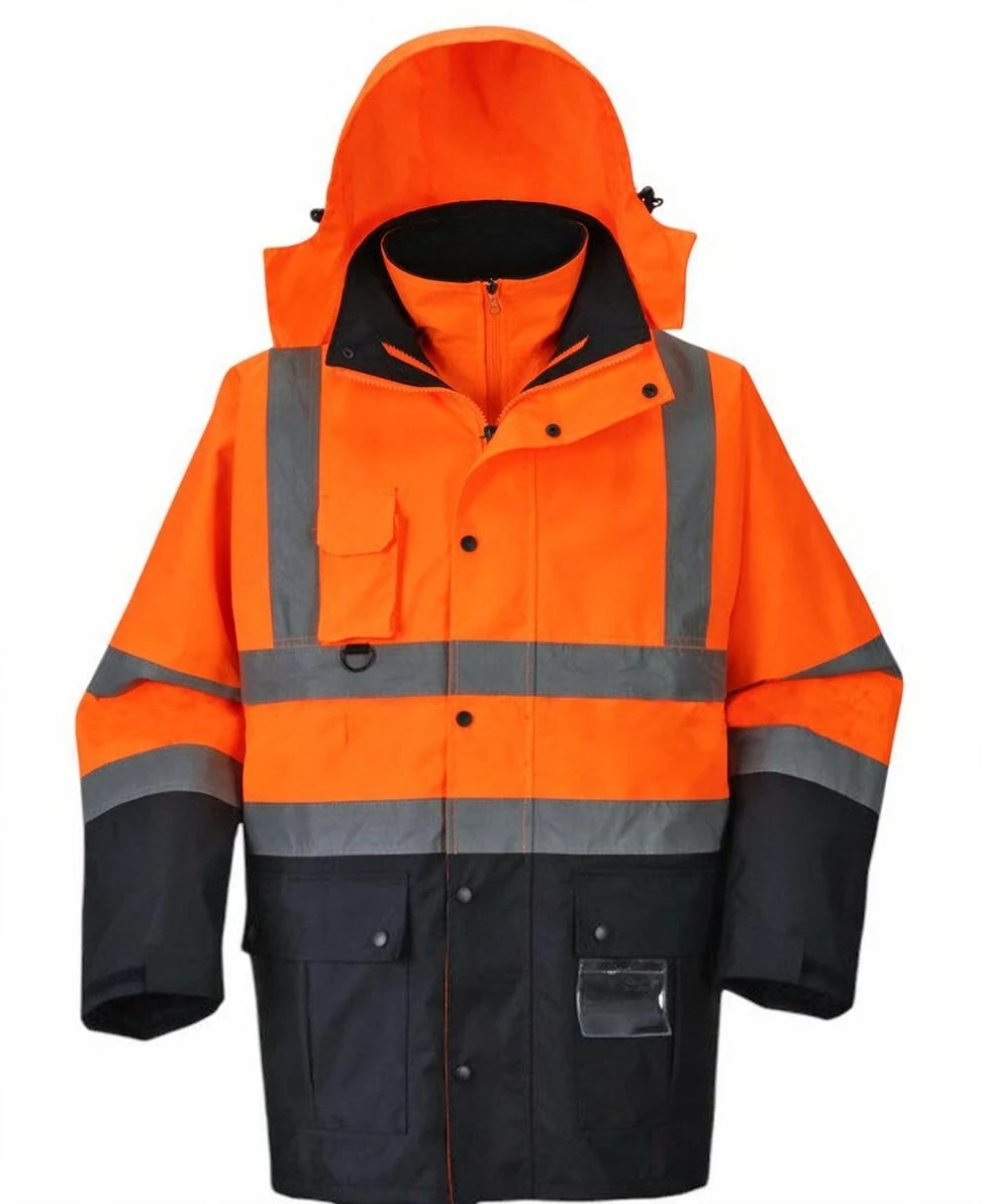
The user-supplied TSE EU type-examination document for BS-1000–BS-1003 and BS-4000–BS-4003 includes TS EN ISO 20471 Class 3 and TS EN 343 3:2. Do not extend that certificate automatically to every catalogue product. Inner jackets in the modular family separately record Class 2. Assess the outer and inner pieces of BS-1001 individually.
EN ISO 13688 is not included in that type-examination document. The catalogue's EN ISO 13688 general conformity statement remains a manufacturer's declaration, not independent certificate verification. A standard appearing in the catalogue and its inclusion in a specific certificate are separate matters. Discuss differences between document dates, model names, covered sizes and the sales entry with the manufacturer.
Employer and procurement assessment
Worksite risks should determine selection. Visibility, rain, cold and other hazards can be separate requirements. Reflective jackets, safety vests and rainwear do not share identical scopes. Match requested protection to recorded model information. State any additional local site-specification requirements in the quotation request.
Preserve usage information
Workers should have access to garment markings and instructions. Care, storage and customisation may affect protective properties. Even with documents available, incorrect layers, unsuitable fit or prints covering visible areas do not establish correct use. Maintain the company's PPE assessment alongside current documents and labels.
Procurement and model verification
Provide model codes, quantities, size allocation, field conditions and logo placement when requesting a quotation. Requesting a standard does not establish that the model is independently certified to it. Review product descriptions, technical tables and the Certificates section together. Read labels, instructions and declarations for the specific model; another product's data do not transfer automatically.
Compare body measurements with the size guide and test movement while wearing the intended layers. Printing or embroidery must not reduce visible areas or compromise protective construction; discuss the customisation plan with the manufacturer. Follow garment labels for care and storage. If no service-year or wash-cycle limit is verified, do not assume a fixed lifetime. International supply requires a separate review of destination regulations; CE marking is not automatic acceptance in every country.
The standards guide explains terminology; use catalogue documents for specific model information. Request a corporate quotation for your team's needs.
Clarify scope in international supply
The EU conformity framework may differ from another country's import or occupational-safety requirements. For Middle Eastern and African requests, state the country of use, site specification and requested document types. Compare existing model documents with those requirements before making acceptance decisions. No all-country approval or registration guarantee is given without that review. Consult qualified advisers for current local rules. A commercial quote does not replace legal conformity assessment; accurate matching of model codes and document scope supports both processes.