2026-11-22 · 5 min read
High-Visibility Clothing Guide for Construction Sites
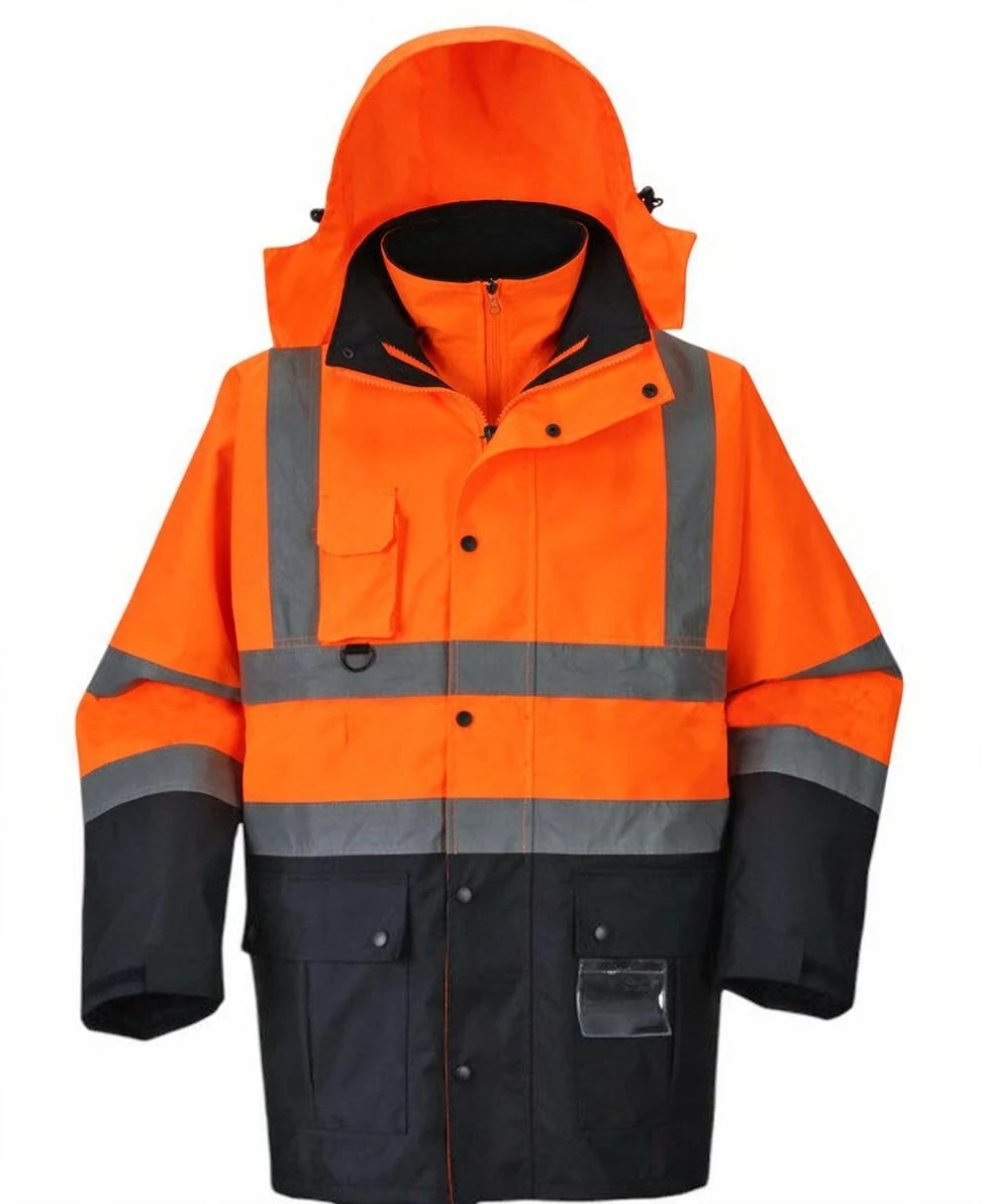
Choosing high-visibility clothing on a construction site starts with understanding where vehicles and machinery meet workers. Excavations, warehouses, delivery entrances and pedestrian crossings can have different risks on the same site. Rather than selecting one garment by sector name, the employer's risk assessment should determine the required PPE and visibility class. This guide explains general principles; consult a qualified adviser for current regulations and site specifications.
Separate traffic and work areas
Review vehicle routes, blind spots, manoeuvring spaces and pedestrian paths separately. Clothing does not replace site organisation or traffic control. Loads, structures and weather obscuring an operator's view need separate controls. High visibility supports detection but is not the only measure making an approach to machinery safe. Safe working arrangements between employers, workers and operators must also be defined.
A visitor's entry vest and a full-shift worker's jacket may address different needs. Shift time, duration, vehicle speed, weather and movement all affect decisions. Reflective strips need suitable incident light; a fluorescent colour alone does not illuminate a dark environment. Check whether bags, harnesses or other clothes cover visible areas.
Match visibility classes to documented models
| Class | Fluorescent area | Retroreflective area | Environment to assess |
|---|---|---|---|
| 1 | ≥0.14 m² | ≥0.10 m² | Lower traffic risk; worksite assessment required |
| 2 | ≥0.50 m² | ≥0.13 m² | Warehousing, logistics and urban work; assess the actual risk |
| 3 | ≥0.80 m² | ≥0.20 m² | Higher traffic risk, night work and poor visibility |
These examples are not automatic legal assignments. Minimum areas do not explain every garment requirement; assess design, material performance, marking and model verification too.
The area values support general class comparison. Confirm the requested class against the model documents. BS-1001 records outer-jacket Class 3 and inner-jacket Class 2; removing the shell does not automatically retain the same class. 5in1 parkas allow different configurations, but each must be assessed against the task requirement. EN ISO 20471 alone on an entry does not establish Class 3 for every model.
Rain, temperatures and layers
Outdoor work can involve rain and wind, while indoor tasks may emphasise movement and perspiration. EN 343 concerns rain protection; EN ISO 20471 concerns visibility. One does not replace the other. Recorded EN 343 3:2 denotes water-penetration resistance Class 3 and a water-vapour resistance classification of 2. It does not by itself set shift duration or temperature limits.
Layers must not interfere with bending, reaching or vehicle use. Choose an inner jacket or vest according to required visibility and other PPE, not temperature alone. Logos, team colours and role markings must not reduce visible areas. Assess samples through real work movements; standing-only checks cannot establish complete fit.
Allocate sizes and organise the team list
Group workers by duties and list models and sizes separately. Where one person needs summer and winter options, use separate lines. Check the model's catalogue size range; discuss any distinction from the certificate's covered range with the manufacturer. Do not use upper-body measurements as finished trouser dimensions.
A size-distribution list gathered under the company's appropriate process may suffice without individual names. The aim is allocating quantities accurately. For deliveries to multiple sites, match model and size quantities to each address. The company's usage arrangements should determine spare and replacement needs; no fixed spare-stock percentage is proposed here.
Inspection and garment care
Before work, inspect dirt, fading, detached tape, tears and failed fastenings. Label-compliant cleaning helps preserve visible surfaces. BS-1001 records reflective strips resistant to 60 °C washing, not blanket permission to wash every product at that temperature. Follow the label covering the whole garment.
Do not invent service-year or wash-cycle limits where none are verified. Assess a damaged garment for protective use, not simply corporate appearance. The care guide and standards support interpretation. Compare suitable models through reflective jackets and safety vests.
Procurement and model verification
Provide model codes, quantities, size allocation, field conditions and logo placement when requesting a quotation. Requesting a standard does not establish that the model is independently certified to it. Review product descriptions, technical tables and the Certificates section together. Read labels, instructions and declarations for the specific model; another product's data do not transfer automatically.
Compare body measurements with the size guide and test movement while wearing the intended layers. Printing or embroidery must not reduce visible areas or compromise protective construction; discuss the customisation plan with the manufacturer. Follow garment labels for care and storage. If no service-year or wash-cycle limit is verified, do not assume a fixed lifetime. International supply requires a separate review of destination regulations; CE marking is not automatic acceptance in every country.
The standards guide explains terminology; use catalogue documents for specific model information. Request a corporate quotation for your team's needs.
Reassess purchasing lists when site requirements change; equipment suitable for an earlier shift is not automatically suitable for a new duty.